
“This post contains affiliate links. If you click and buy, we may earn a small commission at no extra cost to you. See our Affiliate Disclaimer for details.”
My current headboard is 38 inches tall, low wood, secondhand off Facebook Marketplace for $80. Before it landed in my bedroom, I spent about seven months cycling through wrong choices, including one that shipped back with a return fee attached. The bedroom is 10 by 13 feet, one north-facing window, and the bed sits on the long wall under a deep green paint job. Every frame I considered had to answer to those numbers.
Learning how to choose a bed frame is less about style and more about how the frame negotiates with the room around it. Ceiling height, wall length, mattress depth, and the two feet you need to walk past the footboard all matter more than whether the finish is walnut or oak. This guide walks through the sequence I wish I had followed the first time, from measuring the room to landing on a frame you will not resent in a year.
Table of Contents
The three-envelope rule for bed frames
A bed frame has to fit inside three envelopes at once, and most bad purchases come from checking only one of them.
The first envelope is the floor footprint. That is the length and width the frame occupies on the ground, plus the walking clearance you need around it. In a 10 by 13 room, that clearance is usually 24 inches on the sides you actually use.
The second envelope is the vertical stack. Floor to top of mattress. A 14 inch frame plus a 12 inch mattress puts your sleeping surface at 26 inches, which changes how you sit down, how the nightstand reads next to it, and whether the headboard swallows your art.
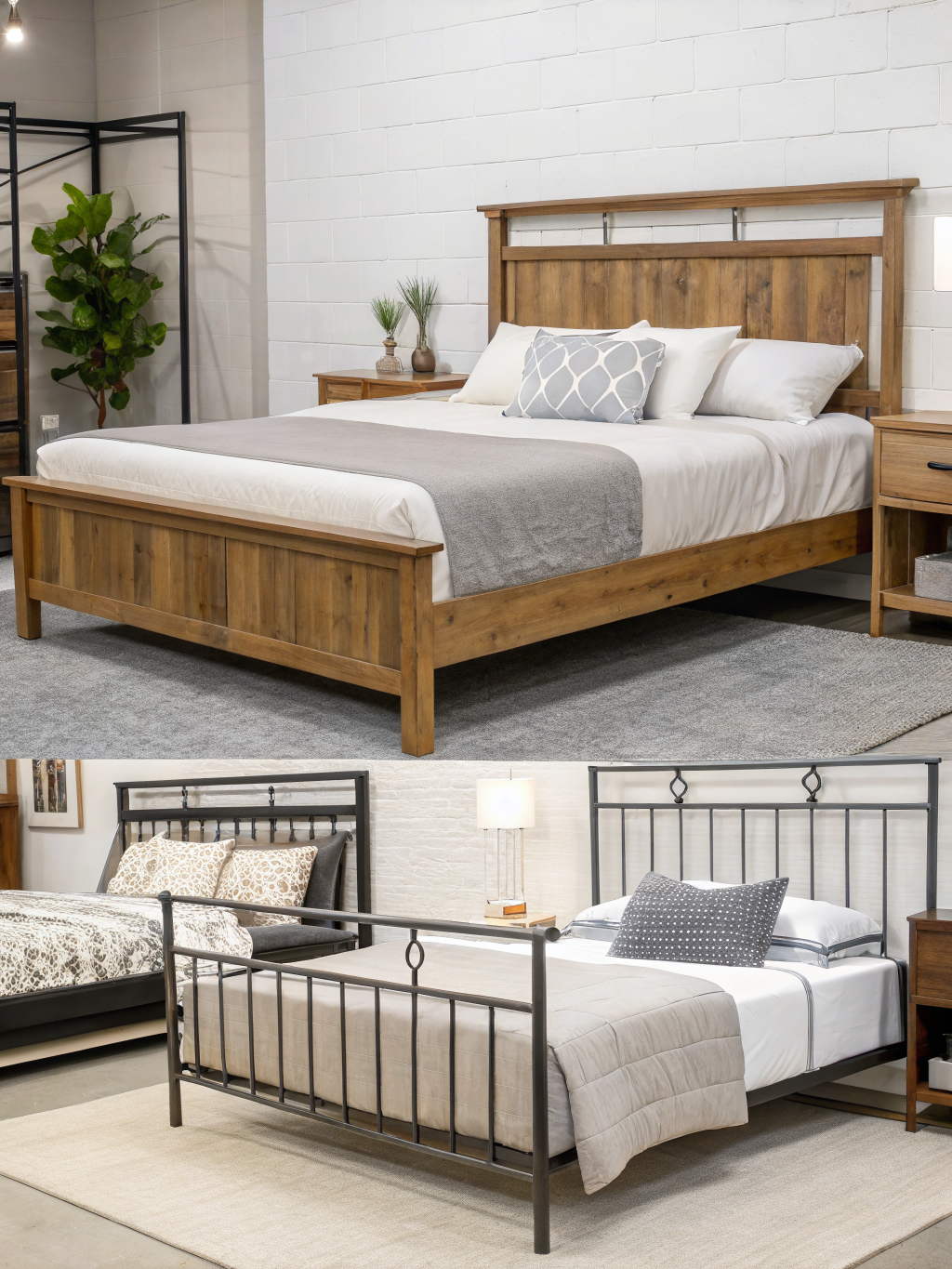
The third envelope is the visual weight. A chunky platform with a solid base reads heavier than a metal frame on four legs, even at identical dimensions. In a small bedroom, visual weight is the one people forget, and it is the one that makes a room feel packed instead of settled.
Measuring the room before you look at frames
Before opening a single tab, I measure four things: wall length where the bed will sit, distance from that wall to whatever is opposite, ceiling height, and the swing radius of the bedroom door. In my case that is 13 feet, 10 feet, 8 feet, and about 32 inches of door swing that eats into the corner.
Then I subtract. A queen mattress is 60 by 80 inches, so the frame will be roughly 64 by 84 inches once you count the rails and headboard depth. On a 13 foot wall that leaves 72 inches of wall, or 36 inches on each side if the bed is centered. That is enough for a nightstand around 20 inches wide with breathing room, which is what I have.
The Mattress Sizes chart is worth pulling up here because a lot of frames are sold in ambiguous names, and knowing that a full is 54 inches wide while a queen is 60 tells you whether the frame you like will actually swallow your existing mattress. I have watched people order a frame assuming their mattress was queen and discover it was a full from a hand-me-down years ago.
Ceiling height decides headboard height. My ceilings are 8 feet flat, popcorn textured, and that is a hard cap. Anything above about 48 inches of headboard starts pushing into wall space that should be breathing.
Choosing the frame type for how you actually live
Frames fall into a few honest categories, and the right one depends on your storage situation and how often you move.
Platform frames with slats skip the box spring. They sit lower, usually 6 to 14 inches off the floor, and they suit small rooms because they reduce the vertical stack. Mine is a platform. The mattress top sits at about 24 inches, which lines up cleanly with my 18 inch nightstand lamps.
Metal frames with a separate headboard are the cheapest route. IKEA sells them in the $150 to $250 range, and if you are moving in the next two years, a frame that breaks down into flat pieces is worth more than a beautiful one that does not fit through the door.
Storage frames with drawers underneath are useful if your closet is small, but they are heavy, they trap dust, and they usually cost double a comparable platform. In a one-bedroom rental where the storage ottoman in the living room already handles overflow, I did not need one. Someone with no linen closet might feel differently.
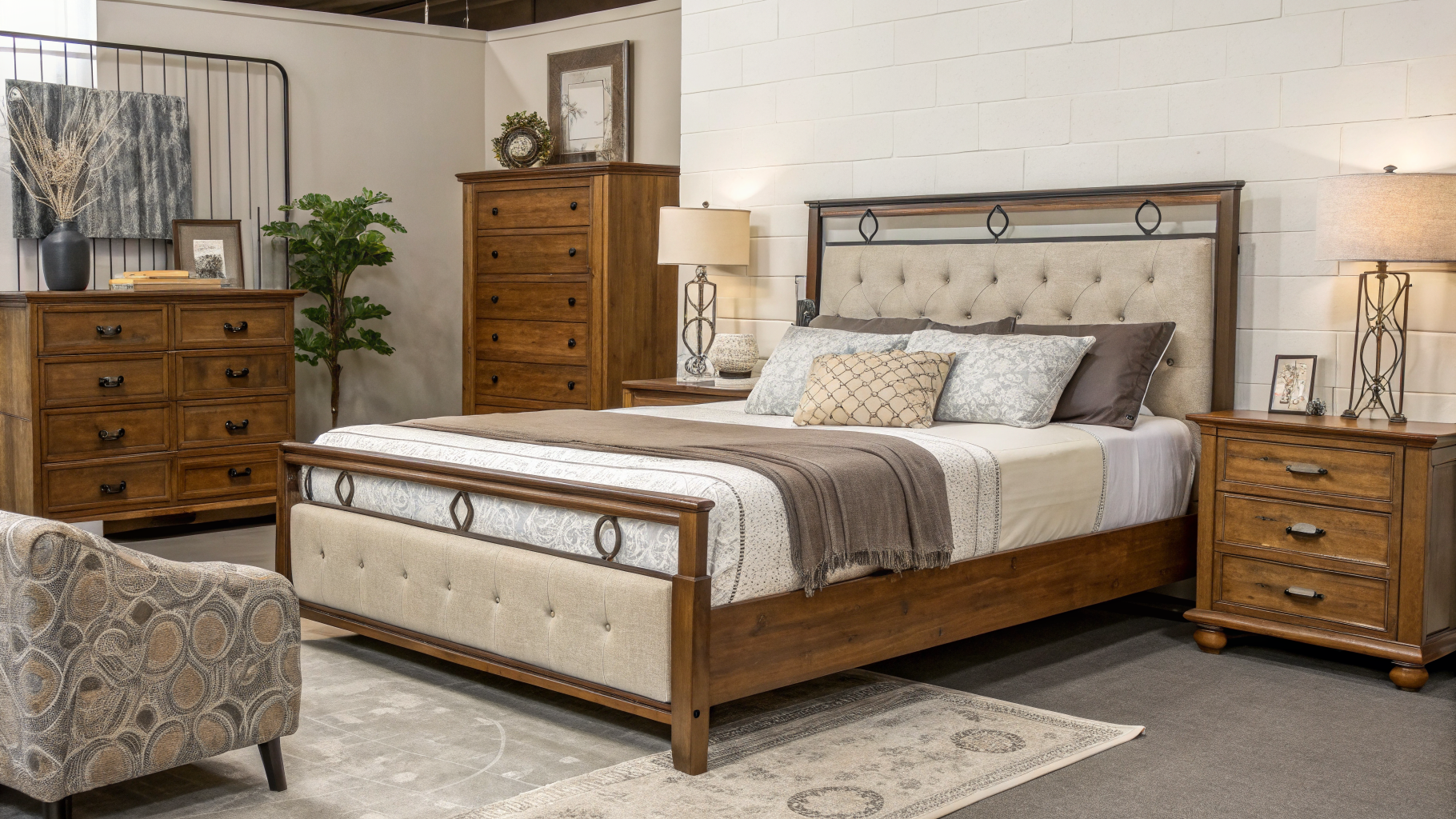
Upholstered frames look softer, but they collect dust in the fabric channels and they are the hardest to move. If you have pets or you rent, think twice.
Getting the proportions right against the wall
This is where knowing how to choose a bed frame stops being about the frame itself and starts being about the wall it lives on.
A headboard should generally sit between 36 and 54 inches tall in an 8 foot room. Under 36 and it reads like a hostel bunk. Over 54 and it starts crowding the ceiling. My 38 inch headboard leaves about 46 inches of green paint above it, which is enough for a piece of art around 24 by 30 inches with margin on both sides.
Width matters too. A headboard that stops flush with the mattress edges looks intentional. One that extends 4 to 6 inches past the mattress on each side reads more substantial, but it also eats into your nightstand zone. In a 13 foot wall with a 60 inch mattress, an extended headboard at 72 inches wide leaves you 36 inches on each side, which is still fine. Push it to 80 inches wide and your nightstands start pressing against it.
Footboards deserve a hard look. In a 10 foot deep room, a footboard that adds 4 inches of length pushes the walking path from 30 inches to 26 inches. That is a noticeable difference when you are carrying laundry past it at midnight.
Where I got it wrong
Between the boucle headboard I already wrote about and the low wood one I ended up keeping, there was a middle attempt I do not like admitting to. A metal four-poster frame from a Facebook Marketplace listing, $60, tall thin posts rising to about 76 inches. The listing photos made it look airy. In person, in a 10 by 13 room with 8 foot ceilings, those posts were 4 inches from the ceiling and they cut the room into vertical stripes every time I walked in.
I lived with it for about six weeks, hoping I would adjust. I did not. Selling it back on Marketplace cost me $15 in gas driving it across town in a borrowed hatchback, plus a Saturday morning. The lesson was that in a room with 8 foot ceilings, anything vertical above about 54 inches fights the room instead of joining it. A four-poster wants a taller ceiling than mine has, and no amount of styling was going to fix that.
What you should actually spend
Frames cover a wide price range, and most of the difference between a $200 frame and a $900 frame is finish quality rather than structure.
| Frame type | Typical price range | Best for |
|---|---|---|
| Basic metal with slats | $120 to $250 | Renters, movers, hidden under a bedskirt |
| IKEA or Target platform | $200 to $450 | Small rooms, low profile |
| Secondhand solid wood | $60 to $200 | Anyone patient enough to check Marketplace weekly |
| Upholstered new | $400 to $900 | People who plan to stay put five plus years |
| Storage platform with drawers | $500 to $1,200 | Small apartments without closets |
My $80 secondhand wood headboard plus a $140 metal platform base from a hardware store puts my total at $220. A comparable new upholstered frame at West Elm would have run me around $700 before delivery, and I would have spent the difference on something like the marble tray on my dresser or a rug I actually wanted, which is what I did.
The place I would spend more is slat spacing and center support. Slats spaced wider than 3 inches will sag a memory foam mattress within a year. A good frame has slats every 2 to 3 inches and a center rail with at least one leg touching the floor. Everything else is finish.
What to do if the frame you bought is wrong
Some frame mistakes are fixable. Some are not.
Fixable: a frame that is slightly too low can gain 3 to 4 inches with bed risers from the hardware store, around $12. A headboard that is too plain can be softened by hanging art above it or adding a large lumbar pillow. A frame that squeaks can usually be silenced with washers and a hex key.
Not fixable: a frame that is the wrong size for your mattress, a footboard that blocks your walking path, or a headboard tall enough to eat your ceiling line. Those are structural. Sell the frame, take the loss, and treat it as tuition. Facebook Marketplace tends to recover about 40 to 60 percent of what you paid, sometimes more if you photograph it in daylight against a clean wall.
The frames I regret the most were the ones I tried to justify for three months before admitting the room disagreed. The room always wins.
Where to start
- Measure the bed wall, the opposite wall, and the ceiling before opening a single shopping tab.
- Confirm your actual mattress size against a chart, not against memory.
- Pick a headboard height between 36 and 54 inches for 8 foot ceilings.
- Check slat spacing at 2 to 3 inches and confirm a center support leg.
- Search Marketplace for solid wood options under $200 before buying new.
- If you want drawers underneath, see this guide on storage bed frames for larger mattress sizes for how the proportions change with a bigger footprint.
The thing I am still turning over is whether the low wood headboard is actually the right scale for a 13 foot wall or whether I have just gotten used to it. Some nights it looks correct. Other nights it looks like I settled for what fit the budget, and I am not sure I can tell those two feelings apart anymore.