

“This post contains affiliate links. If you click and buy, we may earn a small commission at no extra cost to you. See our Affiliate Disclaimer for details.”
Picture a bed with a 14-inch mattress on top of a 9-inch platform, and a nightstand next to it that hits somewhere around 22 inches. The lamp base sits below the mattress line. A water glass has to be lifted up and over. Reading glasses slide toward the edge because the surface is angled away from sight. This mismatch is the single most common reason a bedroom feels slightly off even when every piece was chosen carefully.
This nightstand height guide explains how to measure your bed correctly, what height range actually works, how to handle unusual mattress stacks, and what to do when the piece you already own is wrong. It covers standard sizing, exceptions for platform beds and tall upholstered frames, and the one measurement most shoppers skip.
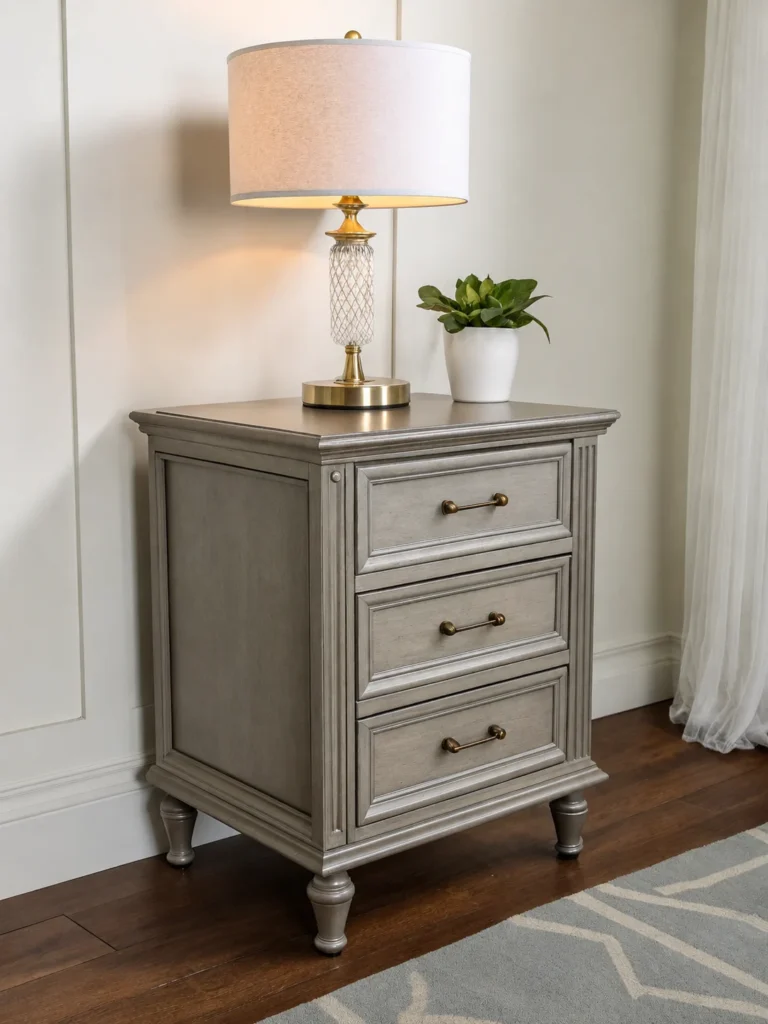
The mattress-top rule that governs everything
Every decision about nightstand height comes back to one reference point: the top of the finished mattress. Not the bed frame, not the headboard, not the box spring. The mattress top is where your hand lands when you reach sideways in the dark, and the nightstand surface should meet that hand naturally.
The working rule is a three-inch band. The ideal nightstand surface sits within roughly 3 inches above or below the mattress top. Level is best. Slightly above is acceptable and often preferred for reading lamps. Slightly below is workable if the piece has a lip or raised edge that keeps items from sliding.
Outside that band, function degrades quickly. A surface 6 inches below the mattress forces a downward reach that spills drinks. A surface 6 inches above the mattress blocks sightlines and makes the lamp glare directly into the pillow. Everything below flows from this band.
Measure the bed you actually have, not the bed on the box
Bed dimensions on retailer pages describe the frame, not the sleeping surface. To get a usable number, measure from the floor to the top of the made mattress, with sheets and mattress pad in place. That final height is the only one that matters for bedside table height.
Common finished mattress heights fall into three broad zones:
- Low platform setups: 18 to 22 inches from floor to mattress top
- Standard frame with box spring and 10 to 12 inch mattress: 24 to 27 inches
- Tall upholstered or storage beds with thick mattresses: 28 to 34 inches
Once you have the finished mattress height, subtract 3 inches for the low end of your target nightstand range and add 3 inches for the high end. A bed measuring 26 inches to the mattress top wants a nightstand between roughly 23 and 29 inches tall. Most standard nightstands land at 24 to 28 inches, which is why they fit most beds, and why they fail badly when the bed is unusually low or unusually tall.
Matching height ranges to bed types
Different bed styles push the mattress top into different zones, and the nightstand needs to follow.
Low platform beds. A platform bed with a slim mattress can put the sleeping surface as low as 18 inches. Standard 26-inch nightstands will loom over it. Look for a low profile piece in the 18 to 22 inch range, or a small bench-style table designed for platform sleepers.
Standard beds with box spring. This is the easiest case. Most nightstands sold in furniture stores target this zone, which means a 25 to 28 inch piece will work with almost any bed built around a 10 to 12 inch mattress and a 9 inch box spring.
Tall upholstered beds. Wingback and channel-tufted frames often push mattress tops past 30 inches. A 26-inch nightstand next to a 32-inch mattress top creates the awkward downward reach described earlier. Search specifically for a tall nightstand or a small chest of drawers in the 28 to 32 inch range.
Adjustable bases. These add 4 to 6 inches to the frame height and are often overlooked. Measure the base in its flat position, then add mattress thickness.
Height comparison at a glance
| Bed type | Typical mattress top height | Target nightstand height | Piece style to search |
|---|---|---|---|
| Low platform | 18 to 22 in | 18 to 24 in | Low profile nightstand, side bench |
| Standard frame plus box spring | 24 to 27 in | 24 to 28 in | Standard two-drawer nightstand |
| Upholstered or storage bed | 28 to 32 in | 28 to 32 in | Tall nightstand, small chest |
| Adjustable base plus thick mattress | 30 to 34 in | 30 to 34 in | Small chest, three-drawer nightstand |
Width, depth, and the space between nightstand and bed
Height gets most of the attention, but two other measurements decide whether the piece works day to day. Width should relate to the bed. A queen or king frame carries a nightstand between 20 and 30 inches wide without looking undersized. A twin or full bed pairs better with a 16 to 22 inch piece.
Depth affects how much surface is usable. Anything shallower than 14 inches struggles to hold a lamp base plus a book plus a phone. Depths of 16 to 20 inches are the most versatile.
Leave 2 to 3 inches of gap between the nightstand and the bed frame. Pushed flush, drawers scrape the frame and bedding catches on corners. More than 4 inches, and small items fall into the gap.
The mistake that comes from ordering before measuring
The common failure is buying a nightstand based on a photo where it looked proportional, then discovering it sits 4 inches too low next to the actual bed. This happens because retailer styling shots use beds selected to flatter the nightstand, not the beds most people own. A 24-inch nightstand photographed next to a low platform bed looks correct in the image and wrong in a bedroom with a pillowtop mattress.
The fix is boring and reliable. Measure the finished mattress height first. Write it down. Then filter nightstand listings by height, not by style. If a piece you love is 3 inches short, a raised lamp with a taller base can partially close the visual gap, but it will not fix the downward reach for a water glass. Height comes first, aesthetics second.
Where to start
- Measure floor to finished mattress top with all bedding in place
- Set your target nightstand height at that number, plus or minus 3 inches
- Confirm the width falls between roughly 20 and 30 inches for a queen or king
- Check depth is at least 14 inches so a lamp and book both fit
- Plan a 2 to 3 inch gap between the piece and the bed frame
- For more on pulling the rest of the room together, see our full bedroom design library
For a second reference on bedside table height alongside proportion tips, that guide covers a few adjacent cases worth reviewing before ordering.
The decision that matters most is which measurement you trust. Nightstand height on a product page is fixed and honest. Mattress top height in your own room depends on the frame, the box spring, the mattress thickness, and the topper you added last winter. If you get that number right, the rest of the bedside table height question mostly answers itself. If you skip it, no amount of style matching will make the piece feel correct at 2 a.m. when you reach for a glass of water.