
“This post contains affiliate links. If you click and buy, we may earn a small commission at no extra cost to you. See our Affiliate Disclaimer for details.”
A dresser top can easily become a drop zone for laundry, phone chargers, receipts, water glasses, and all the small things that don’t seem to have a permanent home. The problem is that because a dresser occupies such a visible part of the bedroom, even a little clutter can make the entire room feel less organized.
Learning how to style a dresser top is a simple way to make a noticeable difference without redecorating the entire bedroom. The right combination of a mirror or artwork, lighting, decorative objects, useful storage, and intentional empty space can turn an overlooked surface into a polished focal point.
You don’t need expensive accessories or a complicated arrangement either. Here are 12 practical dresser-top styling ideas that can help you create a surface that looks balanced, intentional, and easy to maintain.
Table of Contents
The Basic Formula Behind Every Styled Dresser
Before the specific ideas, there’s one framework that makes all of them easier. Almost every well-styled dresser follows the same quiet math: something tall, something layered, and something living. A tall element gives height, a layered element adds depth, and a living element keeps it from feeling static.
Once you see that pattern you can build any arrangement from it. Everything below is really just a different way to fill those three roles, so if you remember nothing else, remember tall, layered, living.
1. Anchor One Side With a Lamp
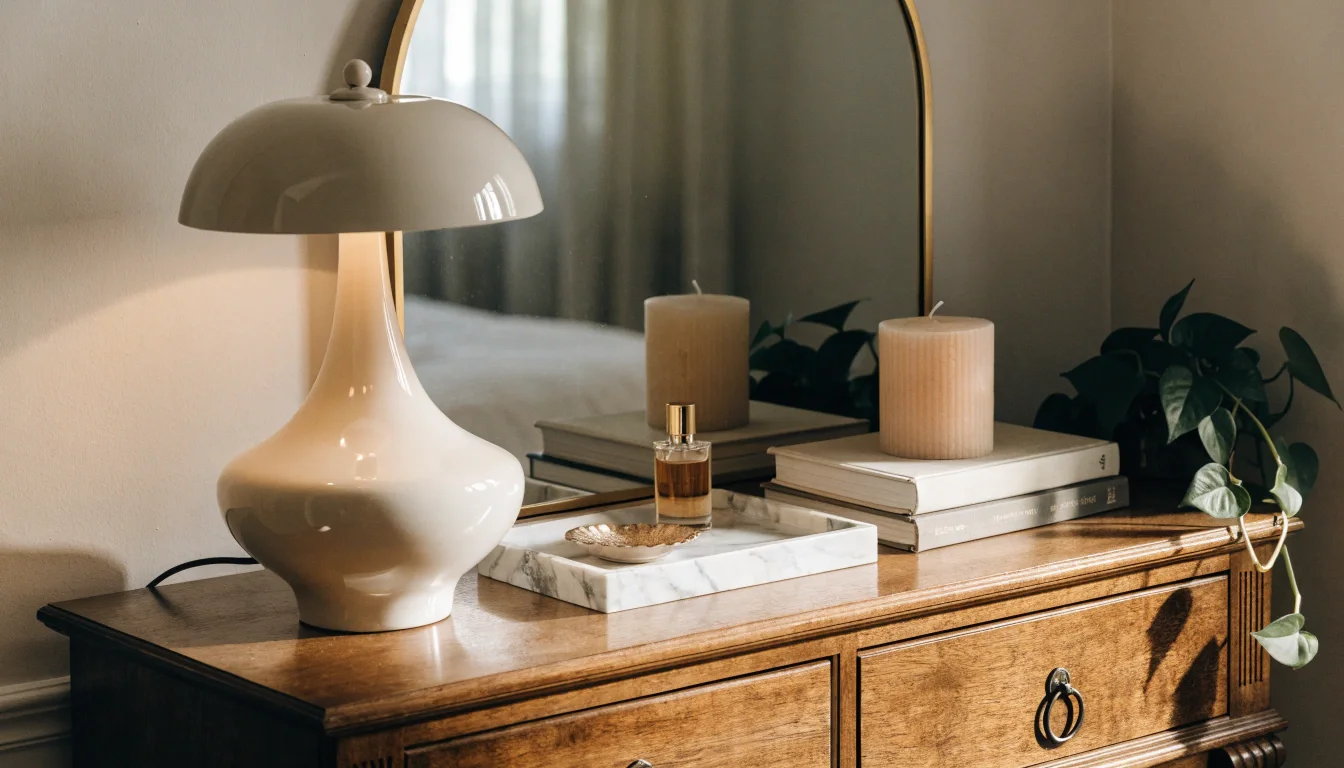
A lamp is the easiest way to add height and warm light in one object. Placing it toward one end rather than dead center gives you an asymmetrical starting point that looks more collected than a perfectly centered arrangement. A ceramic-base lamp around 18 inches tall can provide useful height while adding warm ambient lighting.
2. Lean a Mirror Against the Wall
A mirror propped behind the dresser instead of hung adds instant height and bounces light around the room, which makes the whole space feel bigger. Leaning it rather than mounting it keeps the look relaxed and lets you layer things in front of it.
An arched or thin-framed mirror around two to three feet tall works well for most dressers. The reflection doubles whatever you place in front of it, so a little greenery reads as a lot.
3. Use a Tray to Corral Small Things
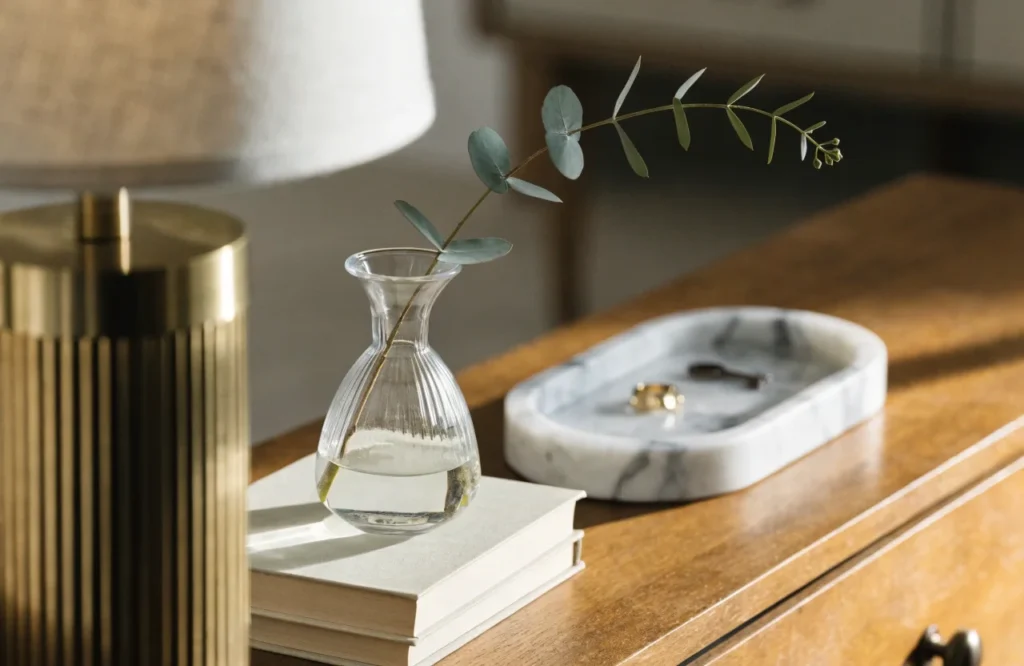
A tray is the single best trick for a dresser that keeps getting messy. It gives your small items a defined home, so jewelry, a perfume bottle, and a little dish look intentional inside the tray instead of scattered across the surface. I use a marble tray I found at HomeGoods for around $15, and it’s the reason my dresser stays styled instead of sliding back into chaos.
4. Add Something Living
Greenery is what stops a dresser top from looking like a store display. A small potted plant, a trailing pothos, or a single stem in a bud vase brings in an organic shape and a bit of color against the wood.
If you kill every plant you touch, a good faux stem or a dried element like pampas or eucalyptus does the same visual job with zero maintenance. The point is the organic line, not the botany.
5. Stack a Few Books
A small stack of two or three books adds a layer of height you can build on, and it’s the layered element in the tall-layered-living formula. Lay a candle, a small object, or a bud vase on top of the stack to create a mini vignette with dimension.
Turn the books spine-in for a quiet, neutral look, or spine-out if the colors work with your palette. Either way, keep the stack low, three books maximum, so it supports the arrangement instead of dominating it.
6. Work in Odd Numbers
Groupings of three or five almost always look better than two or four. Odd numbers feel natural and a little imperfect, which is exactly the collected look you’re after. An even, symmetrical row reads as stiff and store-bought.
Group your objects in a loose triangle rather than a straight line, with the tallest at the back. That small shift from row to cluster is what makes a dresser look styled by a person rather than arranged by a robot.
7. Vary the Heights
A dresser top where everything is the same height looks flat, no matter how nice each piece is. Contrast a tall lamp with a medium book stack and a low dish, and the difference in levels gives the eye somewhere to travel.
If two things are the same height and sitting next to each other, raise one on a stack of books or a small riser. Height variation is the quiet ingredient that separates a considered arrangement from a cluttered one.
8. Let It Breathe With Negative Space
The most common styling mistake is filling the whole surface. Empty space around your objects is what makes them look intentional, and a dresser packed edge to edge just reads as clutter with better lighting.
Leave at least a third of the surface clear. Cluster your pieces toward one or both ends and let the middle breathe, or group them off-center and leave the rest open. The gaps are doing as much work as the objects.
9. Repeat a Material or Tone
An arrangement holds together when a color or material shows up more than once. A brass lamp base, a brass tray edge, and a brass candlestick tie the whole top together even if the pieces are otherwise unrelated.
Pick one metal or one wood tone and echo it two or three times across the surface. That repetition is invisible when it’s working and is often the reason a magazine dresser looks effortless while yours feels random.
10. Add a Personal Object
A perfectly styled dresser with nothing personal on it looks like a hotel. One meaningful object, a small piece of pottery from a trip, a framed photo, a dish someone made, gives the arrangement a reason to exist and makes the room yours.
Just keep it to one or two personal pieces so they read as intentional accents rather than a memory pile. The single meaningful object in an otherwise edited arrangement is what people actually respond to.
11. Match the Scale to the Dresser
Tiny objects on a big dresser look lost, and oversized pieces on a small dresser look crowded. Scale your styling to the furniture, so a long, low, wide dresser can carry a bigger lamp and a wider spread, while a compact one wants fewer, smaller pieces.
If your arrangement feels off and you can’t say why, scale is usually the culprit. Choosing the right dresser in the first place helps, and my guide to the Best Dressers for Bedroom covers picking a piece whose proportions give you room to style well.
12. Change It With the Seasons
The easiest way to keep a bedroom feeling fresh is to swap two or three items on the dresser a few times a year. A dried stem in autumn, a small candle in winter, fresh greenery in spring costs almost nothing and keeps the room from going stale.
You don’t need to redo the whole arrangement, just rotate the living element and one accent. That small seasonal refresh is the lowest-effort way I’ve found to make a room feel considered all year.
A Five-Minute Version if You’re Starting From Scratch
If your dresser is bare and you want a quick starting point, do this in order:
- Put a lamp toward one end
- Lean a mirror behind it
- Set a tray on the opposite side for small items
- Stack two or three books near the middle
- Add one plant or stem, and stop
That’s a complete, balanced dresser top in about five minutes, and you can refine it from there. The thing I’m still fiddling with on my own dresser is whether to keep the leaning mirror or hang it properly, because the leaning look is relaxed but it eats a little surface I could use. For now the relaxed version is winning, but ask me again in a month.