What Makes a Good Humidifier for Bedroom Use? Top Reliable Picks
Waking up with a dry throat, stuffy nose, static-y sheets, or itchy skin is often a low-humidity problem—especially in winter or in air-conditioned homes. The quickest fix is choosing a good humidifier for bedroom use: one that matches your room size, runs quietly through the night, and maintains a healthy humidity range without constant refills or messy cleanup.
In this guide, you’ll see what actually matters (noise, mist type, runtime, tank design, and safety), plus four reliable Amazon-friendly picks ranked by real-world bedroom needs.
Table of Contents
Quick decision framework: what “good” means for a bedroom humidifier
Most sleep and indoor-air experts recommend keeping indoor relative humidity in the 30%–50% range (with 40%–50% being a common comfort sweet spot). Below that, you may notice dryness and congestion; above ~50%–60%, you increase the risk of condensation and mold.
A bedroom-friendly unit is less about “maximum mist” and more about consistent, quiet output you can live with nightly.
Comparison table: 4 top reliable Amazon picks (ranked)
These are widely available brands/models that tend to be consistently reviewed and commonly stocked on major retailers like Amazon. Use the table to narrow down the best match for your sleep style and room.
| Model (Type) | Best for | Typical runtime | Notable strengths | Watch-outs |
|---|---|---|---|---|
| Levoit Classic 300S (Cool mist ultrasonic, smart) | Most bedrooms + set-and-forget control | Up to ~60 hrs (low) | Quiet, app/humidistat, good tank size | Needs regular cleaning; distilled water helps |
| Honeywell HCM-350 (Evaporative cool mist) | “No white dust” + balanced humidity | Often 18–24 hrs+ (varies) | Self-regulating feel, great for mineral-heavy water | Needs filter replacement |
| Vicks Warm Mist (Warm mist) | Congestion comfort in colder months | ~12+ hrs (varies) | Warm soothing moisture; simple | Hot water/steam—use carefully |
| Pure Enrichment MistAire (Cool mist ultrasonic) | Small rooms + budget-friendly simplicity | Up to ~16 hrs (low) | Compact, easy setup | Smaller tank; can need more frequent refills |
Tip: If you already own a hygrometer, use it. If not, a basic digital hygrometer is one of the easiest ways to avoid running a humidifier “blind.”
1) Levoit Classic 300S — best overall for most people
If you want a good humidifier for bedroom comfort that doesn’t require constant tinkering, this style of smart ultrasonic humidifier checks the right boxes: quiet operation, long runtime, and controls that help you maintain a stable humidity level overnight.
Why it works in a bedroom
- Smart + humidistat control helps prevent over-humidifying (and the damp, clammy feeling that can interrupt sleep).
- Long runtime on low is ideal if you don’t want nightly refills.
- Typically designed with sleep-friendly features like dimmable display and quieter modes.
Best for
- Medium-size bedrooms (and many master bedrooms)
- People who want “set it once” humidity management
- Anyone who tracks humidity and wants it stable, not swinging
Pros
- Strong balance of runtime + coverage
- Convenient controls (app, scheduling, target humidity)
- Often quieter than you’d expect for the output
Cons
- Like most ultrasonics, it needs consistent cleaning
- Mineral buildup/“white dust” can happen with hard water (distilled water helps)

- 𝙀𝙛𝙛𝙤𝙧𝙩𝙡𝙚𝙨𝙨 𝘾𝙤𝙢𝙛𝙤𝙧𝙩 𝙬𝙞𝙩𝙝 𝘼𝙪𝙩𝙤 𝙈𝙤𝙙𝙚: Advanced sensors adjust humidity levels to maintain a consistent and healthy environm…
- 𝙋𝙤𝙬𝙚𝙧𝙛𝙪𝙡 𝙖𝙣𝙙 𝙀𝙛𝙛𝙞𝙘𝙞𝙚𝙣𝙩 𝙋𝙚𝙧𝙛𝙤𝙧𝙢𝙖𝙣𝙘𝙚: Enjoy 4x faster humidification, swiftly relieving dry discomfort. It runs for up to …
- 𝙈𝙪𝙡𝙩𝙞-𝙍𝙤𝙡𝙚 𝙎𝙪𝙞𝙩𝙖𝙗𝙡𝙚 𝙛𝙤𝙧 𝘼𝙡𝙡-𝙙𝙖𝙮 𝘾𝙖𝙧𝙚: Begin your day with morning aromatherapy. Thrive during family time with Auto Mode…
2) Honeywell HCM-350 — best for hard water and “no white dust” households
Evaporative humidifiers work differently than ultrasonics: they use a fan to blow air through a moistened wick filter. The big advantage for bedrooms is practical—evaporative models are less likely to leave mineral dust on surfaces, and they naturally resist pushing humidity too high.
Why it works in a bedroom
- Self-regulating feel: evaporation slows as humidity rises, which helps avoid “overdoing it.”
- Great option if you dislike wiping down surfaces from mineral residue.
- Often a strong pick for allergy-conscious homes when maintained properly.
Best for
- Homes with hard water
- People who want less worry about over-humidification
- Anyone okay with periodic filter changes
Pros
- Lower risk of white dust
- Comfortable humidity output (especially in winter)
- Typically easy to understand and operate
Cons
- Replacement filters add ongoing cost
- Fan sound can be more noticeable than some ultrasonics (varies by sensitivity)
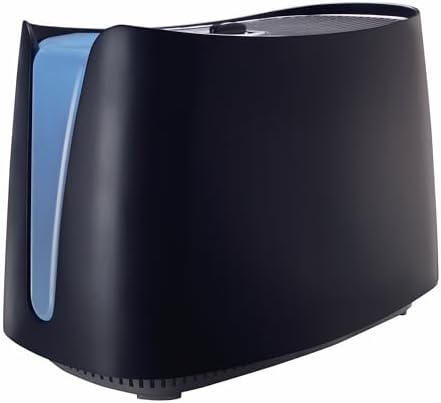
- Humidifier for bedroom: As the ideal baby humidifier, this device has a soft, fan-like sound to add restful noise to any…
- Use with Honeywell filters – For best performance with these cool mist humidifiers, use only a genuine Honeywell Replace…
- Cleaner invisible moisture: this Honeywell cool air humidifier effectively brings invisible moisture to your home; it ut…
3) Vicks Warm Mist — best for seasonal congestion comfort
Warm mist humidifiers boil water to create steam (or warm mist), which many people find soothing when they’re congested. For bedroom use, the key is safety and placement—because heat is involved.
Why it works in a bedroom
- Warm moisture can feel comforting in colder months.
- Often favored during colds, dry coughs, and winter sinus irritation.
- Simple operation—no apps, no complicated settings.
Best for
- Adults who want warm moisture for winter comfort
- People who prioritize that “spa-like” warm mist feel
- Occasional, seasonal use in a bedroom
Pros
- Warm mist can feel soothing for breathing comfort
- Straightforward controls
- Often performs well in drier winter conditions
Cons
- Hot water/steam risk—keep away from kids/pets and avoid bedside edges
- Can increase room warmth slightly
- Still requires regular cleaning/descaling

- Breathe Better, Live Better: Maintain ideal humidity levels in your home (40-60%) with Vicks warm mist humidifier and ke…
- Portable, Easy to Use and Clean: With a top fill, 1 gallon tank providing 24 hours of use in a small or large room up to…
- Quiet Operation for Restful Nights: Ideal air humidifiers for bedroom use, the whisper-quiet operation ensures undisturb…
4) Pure Enrichment MistAire — best for small bedrooms and tight nightstands
If you’re shopping for a compact, budget-friendly unit that still feels bedroom-appropriate, MistAire-style small ultrasonics are popular because they’re simple, quiet enough for many sleepers, and easy to place on a dresser or nightstand.
Why it works in a bedroom
- Compact footprint is perfect for apartments, guest rooms, nurseries, and small bedrooms.
- Often runs quietly on low with minimal distractions.
- Great “starter” option if you’re still figuring out your ideal humidity level.
Best for
- Small rooms (or personal, close-range humidification)
- Light, minimal setups and simple controls
- Guest rooms and occasional use
Pros
- Affordable entry point
- Compact and easy to move
- Simple operation
Cons
- Smaller tank = more frequent refills
- Like many ultrasonics, hard water can cause mineral residue

- Instant Dry Air Relief: Ultrasonic cool mist technology safely and quickly moisturizes dry air for up to 25 hours of con…
- Year-Round Comfort: High and low-speed settings combined with a 360° mist nozzle help you consistently balance and regul…
- Encourage Restful Sleep: Easily run the humidifier overnight to maintain a healthy humidity level in your space. The opt…
Best option by use case (fast picks)
- Best overall: Levoit Classic 300S (balanced performance + smarter control)
- Best for hard water / low residue: Honeywell HCM-350 (evaporative)
- Best for congestion comfort: Vicks Warm Mist (warm moisture)
- Best for small rooms / budget: Pure Enrichment MistAire (compact ultrasonic)
If you’re still undecided, start by choosing the mist type:
- Want fewer mineral dust concerns? Go evaporative.
- Want quieter operation and long runtime? Go ultrasonic (prefer distilled water).
- Want warm soothing moisture (with safety precautions)? Go warm mist.
How to choose the right humidifier size for your bedroom (step-by-step)
Measure your room
- Length × width = square footage.
- Example: 12 ft × 14 ft = 168 sq ft.
Check your starting humidity
- Use a hygrometer for a day or two.
- If you’re often below 30%, you’ll benefit quickly.
Match output to your reality
- Drafty rooms, high ceilings, forced-air heat, and open doors all demand more output.
- If your bedroom door stays open at night, you’re effectively humidifying a larger space.
Decide on “hands-off” vs “simple”
- Want stable humidity with less babysitting? Look for humidistat/smart control.
- Want fewer parts and easy use? A simple dial model can be enough.
Plan your placement
- Keep it a few feet from the bed (avoid direct mist on pillows).
- Place on a stable surface with a water-resistant mat if needed.
- Don’t aim mist at walls, curtains, or electronics.
Common bedroom humidifier mistakes (and how to avoid them)
Mistake 1: Running it too high all night
Over-humidifying can cause window condensation and musty smells. Set a target like 40%–50% and check in the morning.
Mistake 2: Ignoring cleaning because “the water looks fine”
Biofilm can build even when water appears clear. A good humidifier for bedroom use stays “good” only if it’s maintained.
Mistake 3: Using hard water in ultrasonic models and blaming the machine
If you see white dust, try distilled water or follow the manufacturer’s descaling routine more often.
Mistake 4: Placing it too close to your face or bedding
Constant dampness can irritate skin and create moisture spots on furniture.
Maintenance & longevity: keep it clean without making it a chore
A solid routine keeps performance consistent and helps the unit last longer.
Weekly (10 minutes)
- Empty leftover water.
- Rinse the tank and base.
- Clean with manufacturer-approved method (often a mild acid like vinegar for mineral scale).
- Wipe dry before refilling.
Every refill
- Quick rinse if you have time.
- Refill with clean water (distilled if recommended, especially for ultrasonics).
Monthly (or as needed)
- Deep clean/descale if you see mineral buildup.
- Check seals and caps for wear.
- For evaporative units, inspect and replace wick filters per schedule.
Pro tip: If you want the easiest path to “clean enough,” choose a model with a wide tank opening and fewer internal crevices.
Where a bedroom humidifier fits in your setup (and a helpful recommendation)
If you’re shopping on Amazon and want a widely available option category-wise, this is a common place people start: humidifier for bedroom. Use the selection filters to match:
- Room size/coverage
- Runtime (8+ hours is a great baseline for sleep)
- Noise/sleep mode
- Mist type (cool vs warm vs evaporative)
- Humidistat (if you want tighter control)
FAQs: buyer-focused answers
What humidity is best for sleeping?
Most people feel comfortable around 40%–50%. Staying within 30%–50% is a widely recommended indoor range to balance comfort and reduce condensation risk.
Is cool mist or warm mist better for a bedroom?
- Cool mist is popular for bedrooms because it’s typically safer (no heating element) and often quieter.
- Warm mist can feel soothing in winter or during colds, but it involves heat—use careful placement and follow safety guidelines.
How do I know if I’m over-humidifying my bedroom?
Common signs:
- Condensation on windows
- Damp-feeling bedding or cool “clammy” air
- Musty odor
- Humidity readings consistently above ~50%–60%
A humidistat (built-in or separate hygrometer) prevents most of these issues.
Do I need distilled water?
Not always—but it helps, especially with ultrasonic humidifiers. Distilled water can reduce mineral buildup and “white dust.” If you have hard water, it’s often worth it.
What’s the quietest type of humidifier?
Many people find ultrasonic humidifiers quieter because they don’t rely on a fan the way evaporative models do. That said, design matters—always check for sleep mode/low-noise operation.
How often should I clean a humidifier used nightly?
A good baseline is:
- Rinse/refresh water daily (or every refill)
- Clean weekly
- Deep clean monthly (or sooner if you see scale/slime)
What features matter most in a good humidifier for bedroom use?
If you want the shortest shortlist: quiet, all-night runtime, easy cleaning, and right-size output. Everything else (smart app, night light, essential oil tray) is secondary.
A good humidifier for bedroom use is one you’ll actually run consistently: quiet enough to forget, strong enough to maintain ~40%–50% humidity, and easy enough to clean weekly. Start with your room size and water type (hard vs soft), then choose the mist style that fits your household—and you’ll feel the difference in sleep comfort within a few nights.