Small Living Room Ideas: 18 Space-Saving Tricks That Actually Work
“This post contains affiliate links. If you click and buy, we may earn a small commission at no extra cost to you. See our Affiliate Disclaimer for details.”
My living room is 11 feet by 12 feet and it has to be a lounge, a dining spot, and an office, which for a long time meant it was bad at all three. The turning point wasn’t buying smaller furniture. It was realizing I had six things in there doing one job each, when four things could do six jobs between them. Most small living room ideas that get repeated online are really just decorating advice with the word small attached. These 18 are the ones that changed how the room actually functions and feels.
Table of Contents
The Two Things Small Rooms Are Really Short On
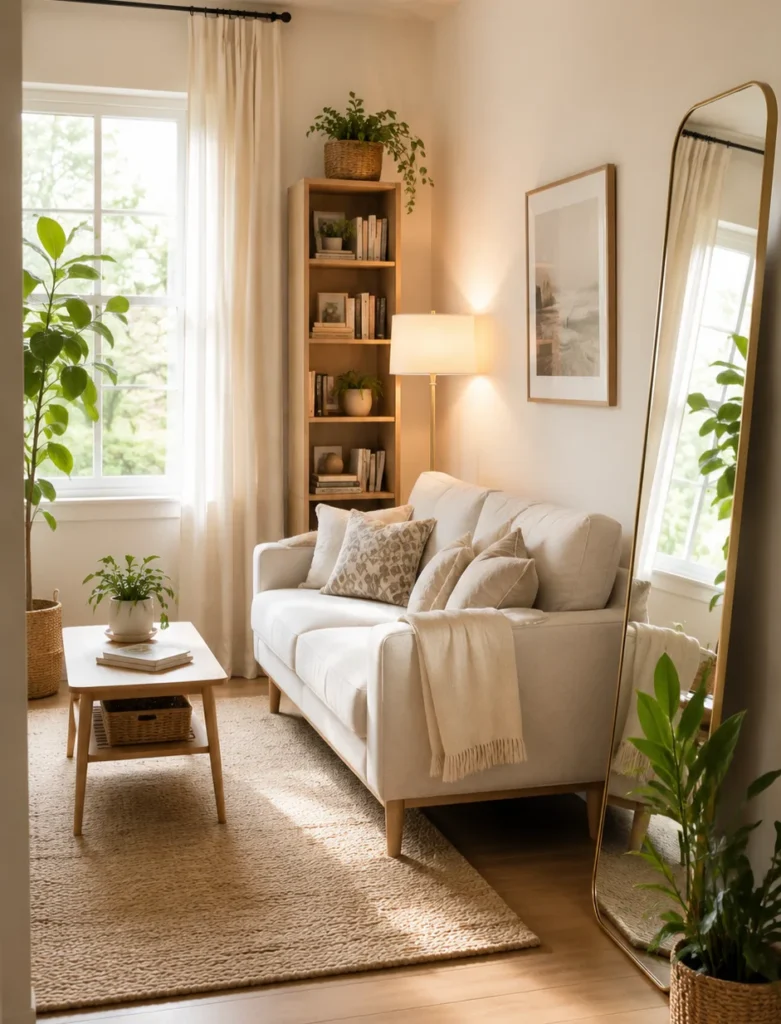
A small living room isn’t just short on floor. It’s short on two specific resources: usable floor path and visual openness. Floor path is whether you can move through the room without turning sideways. Visual openness is how much of the room your eye takes in at once.
Almost every trick below buys you one or both. Once you know which of the two your room is missing, you can pick the fixes that matter instead of trying all eighteen at once.
1. Lift Everything Onto Legs
Furniture with visible legs lets you see the floor continuing underneath it, and that sliver of visible floor makes a room read as larger. A skirted sofa that meets the ground looks like a solid block; the same sofa on four tapered legs looks like it’s floating.
This is the cheapest visual trick there is if you’re already shopping. Choose the legged version of anything.
2. Pull the Sofa Off the Wall
Everyone shoves furniture flat against the walls in a small room, and it usually backfires. A few inches of breathing space behind the sofa makes the room feel intentional rather than crammed, and it stops the layout from looking like a waiting area.
Even three or four inches is enough to register. The gap suggests there’s more room than there is.
3. Buy One Big Rug, Not a Small One
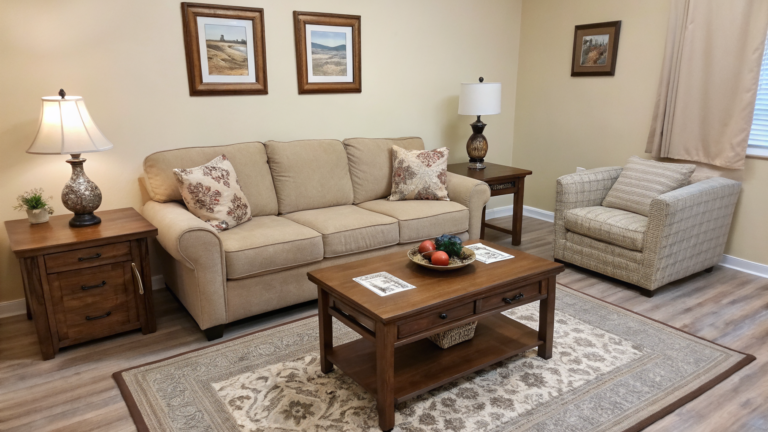
A small rug floating in the center chops the floor into pieces and shrinks the room. A large rug that runs under the front legs of your seating unifies the whole floor into one surface.
My rule is that the rug should be wide enough for the front legs of every seat to sit on it. Undersized rugs are the most common small-room mistake I see, and sizing up costs nothing but the price difference.
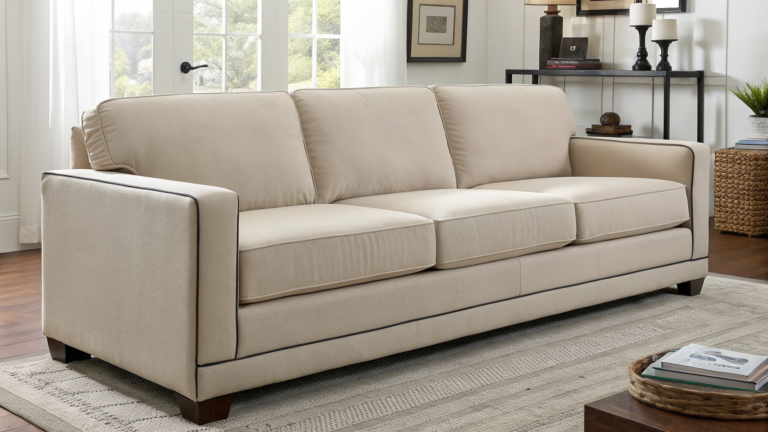
4. Choose a Sofa With a Slim Profile
Depth matters more than length in a small room. A deep, overstuffed sofa eats floor you need for walking, while a slimmer one with a tighter back gives you the same seat count in far less space.
Look for a seat depth around 33 to 36 inches rather than the 40-plus of a lounge-style piece. You lose a little sprawl and gain a walkable room.
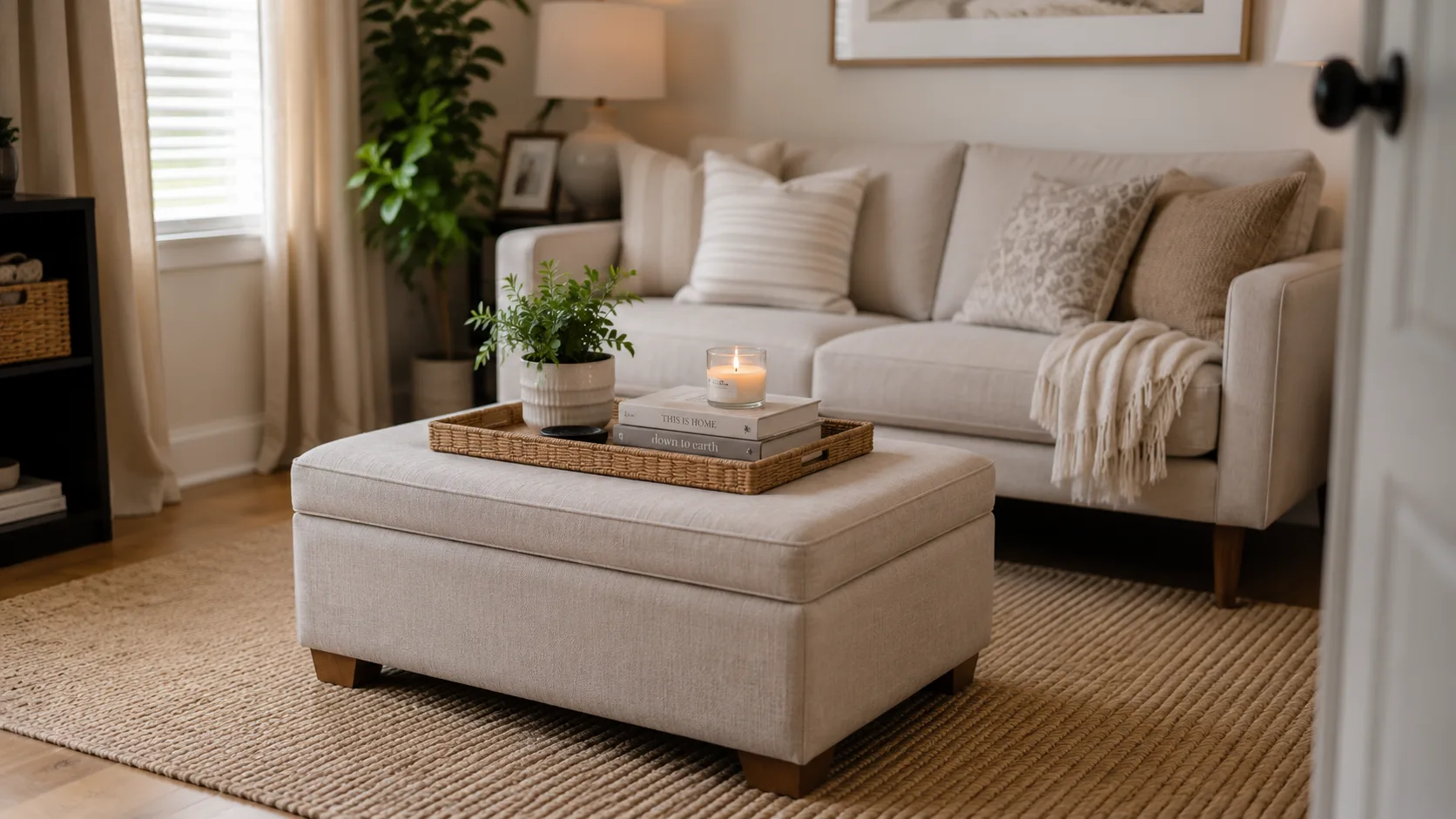
5. Use Furniture That Does Two Jobs
Every piece in a small room should justify itself twice. A storage ottoman is a footrest, a seat, and a bin. A lift-top coffee table is a table and a desk. A bench under the window is seating and shoe storage.
This is the change that fixed my room. I swapped a coffee table and a separate storage cube for one storage ottoman and immediately had more floor and less clutter.
6. Go Vertical With Storage
Tall, narrow shelving uses the height of the room instead of its footprint. A slim bookcase that runs close to the ceiling stores as much as a low wide unit while occupying a fraction of the wall.
Vertical lines also draw the eye upward, which makes ceilings feel higher. Storage and visual height in one purchase.
7. Mount the TV Instead of Standing It
A TV stand is a large piece of furniture whose only real job is holding up a screen. Mounting the TV on the wall removes that entire footprint and frees the floor beneath it for a slim console or nothing at all.
If you rent and can’t drill, a very narrow console under a mounted-look setup still saves depth over a traditional media unit.
8. Hang Curtains High and Wide
Mount the rod near the ceiling and extend it several inches past the window frame on both sides. The window looks bigger, the wall looks taller, and more glass stays uncovered when the curtains are open.
Let the panels reach the floor. Short curtains cut the wall horizontally and lower the whole room.
9. Add a Large Mirror
One big mirror does more than several small ones. Placed opposite or adjacent to a window, it bounces daylight deeper into the room and reflects the view, which reads to the eye as extra depth.
Leaning a tall mirror against the wall works too, and it skips the drilling. Aim for one generous mirror rather than a scattered gallery.
10. Keep the Walking Path Clear
Map the route from your door to your seat to your window, then make sure nothing blocks it. A clear path of at least 30 inches lets you move naturally, and a room you can walk through feels twice the size of one you edge around.
If something sits in the path, move it even if it looks better there. Function wins in a small room.
11. Float a Slim Console Behind the Sofa
A narrow console table behind a sofa adds surface area for lamps and keys without taking new floor, since it uses the gap you already created by pulling the sofa out. Ten inches of depth is enough.
It also defines a boundary in an open-plan space, which is useful if your living room shares a room with something else.
12. Choose Nesting or Round Tables
Nesting tables give you two or three surfaces that collapse into one footprint when you don’t need them. Round tables have no sharp corners to catch hips in a tight walkway, which makes a narrow room easier to move through.
A pair of small round nesting tables beats one big rectangular coffee table in almost any tight layout. They move, they tuck, they adapt.
13. Use a Consistent, Light Color Palette
Lots of contrasting colors visually break a small room into segments. Keeping walls, large furniture, and curtains in a related light palette lets the eye travel without interruption, and the room reads as one continuous space.
Save your color for cushions, art, and small accents. Those are easy to change and they don’t chop up the room.
14. Light the Room in Layers
One central ceiling light casts a flat glare and pushes the corners into shadow, which makes a room feel smaller. Two or three lower light sources spread through the space fill those corners and expand the perceived boundaries.
A floor lamp in the far corner is the single most effective addition. Lit corners tell the eye where the room ends, and a dark corner reads as a wall.
15. Cut the Number of Pieces
Small rooms get crowded by quantity more than by size. Five medium pieces feel worse than three slightly larger ones, because each object needs air around it to look right.
Take one thing out and see how the room feels. Nine times out of ten it feels better with less, and the piece you removed was doing less work than you thought.
16. Hang Art High and in One Statement
A scattering of small frames busies the walls and makes them feel closer. One large piece, or a tightly grouped trio, gives the eye a single place to land and leaves the surrounding wall calm.
Hang it a little higher than feels natural to lift the sightline. Tall art draws the room upward the way vertical shelving does.
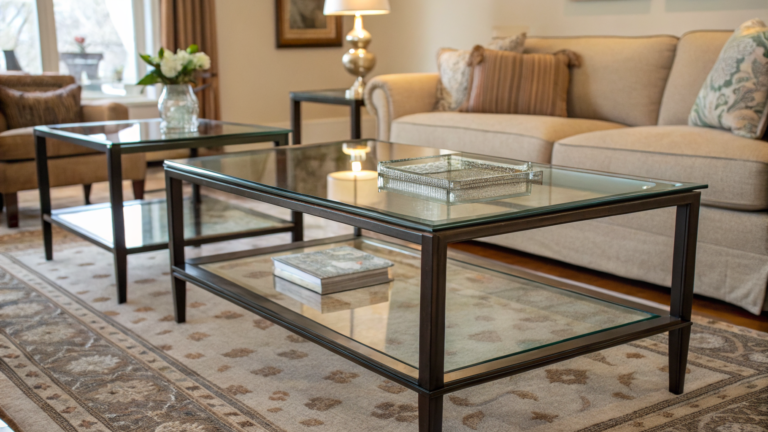
17. Use Glass or Open Frames
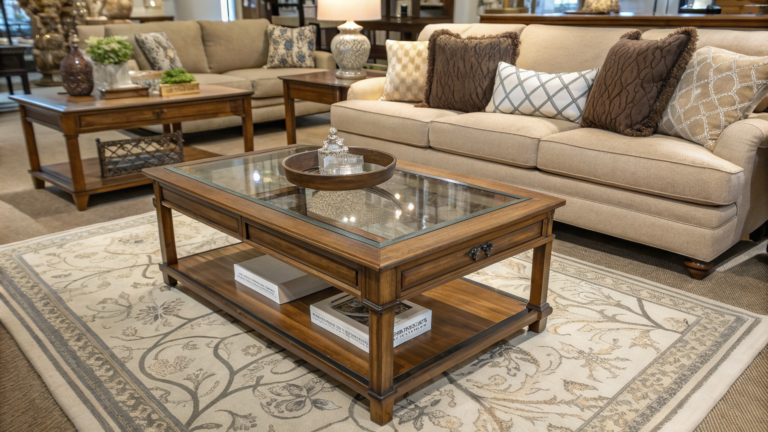
A glass-top coffee table or an open metal frame occupies the same physical space as a solid one but disappears visually. In a tight room, being able to see through your furniture matters more than you would expect.
The same applies to acrylic chairs and open-back shelving. Anything you can see past keeps the room feeling continuous.
18. Define Zones Without Walls
If your living room is also a dining or work space, use a rug, a console back, or a change in lighting to mark where each zone begins. Zones make a shared room feel organized rather than jumbled, and they let a small space do multiple jobs without conflict.
Nothing physical has to divide them. A rug edge is enough for the eye to read a boundary, and the room stays open.
Where I’d Start in a Room Like Mine
If you only tackle a handful, these five do the most work:
- Size up the rug and slide it under the front legs
- Swap one single-use piece for a storage ottoman
- Rehang curtains at ceiling height
- Add a floor lamp to the darkest corner
- Remove one piece of furniture entirely
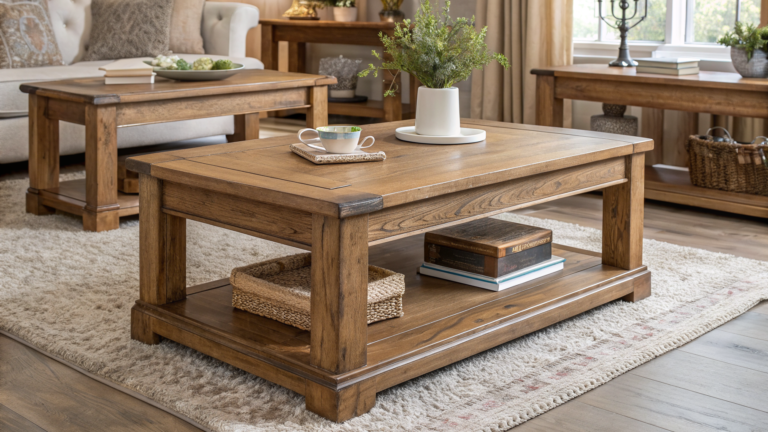
Getting the arrangement right matters as much as the pieces themselves, and my guide to small living room layouts walks through where to place everything once you’ve chosen it. The piece I’m still not settled on is the coffee table. I went glass for the see-through effect and I do think the room looks bigger, but I miss having somewhere to actually put a hot mug without a coaster ritual. I may go back to wood and just accept the extra visual weight.